
Wedding Speech Advice
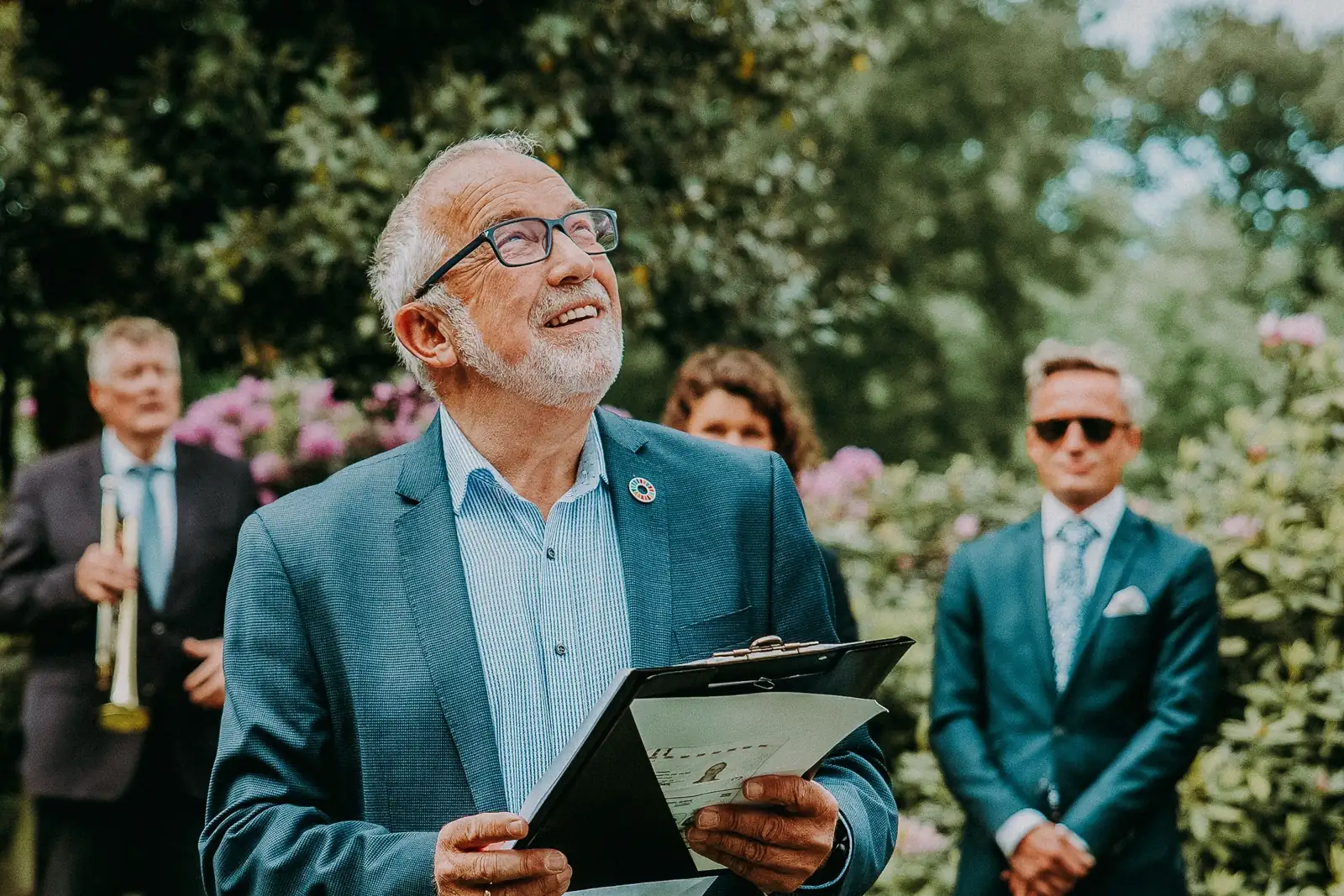
Everything you need to know about writing and delivering a wedding speech, whichever role you're giving it in. Honest guidance on length, structure, tone, nerves, and the mistakes worth avoiding.
Can You Use AI to Write a Wedding Speech?
Yes, and the results are far better than most people expect, as long as the tool is built for the job.
The fear is understandable. Most people who've tried writing a speech with ChatGPT have had the same experience: it produces something smooth, polished, and completely generic. It sounds like a speech, but it doesn't sound like you, and it doesn't sound like the person you're talking about. That's because a general chatbot has nothing specific to work with. It writes the average of every wedding speech ever written, which is exactly what you don't want.
A purpose-built speech writer works differently. Speechcraft asks you specific questions about the person, your history with them, the stories only you know, the tone you want, and the people in the room. Then it builds a speech around those details, in a voice that matches how you actually speak. The specifics are what make it yours. A generic line about a groom being "always up for a laugh" could be about anyone. A line about the night he bought a trumpet at midnight is about one person on earth.
The honest answer is that AI won't do the remembering for you. The raw material, the real moments, the genuine feeling, that has to come from you. What a good speech writer does is take what you give it and shape it into something that flows, lands its jokes, hits its emotional beat, and finishes on time. It removes the part most people dread, which is the blank page.
How Long Should a Wedding Speech Be?
There's no single correct length, and anyone who tells you a speech "must" be exactly seven minutes is guessing. The right length depends on your role, how much genuine material you have, and the mood of the room.
Here's the honest guidance.
Let your material set the length, not the clock. A tight, well-told five-minute speech beats a padded ten-minute one every time. If you have three brilliant stories, tell them well. If you have one, build around it rather than stretching it thin. The fastest way to lose a room is to keep talking after you've run out of things worth saying.
Match the room and the moment. A relaxed evening reception can comfortably carry a longer speech than a formal lunch where the schedule is tight. Read the day you're actually attending.
As a rough guide by role: father of the bride and groom speeches tend to sit in the shorter-to-middle range, maid of honour speeches in the middle, and best man speeches can run the longest because the room expects it. But these are starting points, not rules. A genuinely engaging speech earns its length, and a great speaker can hold a room for longer than the "rules" allow.
When in doubt, slightly longer beats slightly short. A speech that ends just as the room was settling in feels clipped. A speech that runs a little over what you planned, as long as it's holding attention, is fine. The thing to avoid is finishing so quickly that it feels like you didn't have much to say about people you clearly love.
When you create a speech with Speechcraft, you choose your target length, and the speech is written to fit it. You can always trim afterwards, which most people find easier than trying to add.
How to Structure a Wedding Speech
Every good wedding speech, whoever gives it, shares the same underlying shape.
Open by earning the room. The first twenty seconds are the hardest and the most important. Introduce yourself briefly, set your tone, and give people a reason to lean in. One specific line about the person you're speaking about beats any generic opener.
Build the middle around one or two real stories. Not a list of "funny things they did," but one or two specific moments that reveal who the person actually is. A good story has a setup, a detail that makes it real, and a landing. If a story has no landing, cut it.
Make the emotional turn. Every wedding speech earns its place in the sixty seconds where something true and sincere gets said. Not a borrowed quote, not a poem, but something specific and felt. This is the part people remember.
Close on the toast. Don't trail off or fumble the ending. Know your final line before you stand up. Deliver it clearly, raise your glass, and sit down.
How to Write a Best Man Speech
The best man speech carries the most pressure because everyone expects it to be funny. That expectation is both your biggest asset and your biggest trap.
The goal isn't jokes, it's specific observations. A generic gag about the groom being lazy lands flat. A specific story about one real thing he did, told well, lands every time. Specificity is what makes something funny and what makes it feel like a speech about a real person rather than a template.
Structurally, best man speeches work well when they move through time: how you met, what he was like then, who he's become, and who he is now he's found his partner. That gives the speech natural momentum.
Acknowledge the bride or groom warmly and specifically. Say one genuine thing about the partner that lands as a real compliment, not a box ticked.
Avoid inside jokes the room can't follow, stories that only work if you were there, anything that embarrasses the groom's family rather than the groom himself, and any reference to past relationships.
How to Write a Father of the Bride Speech
The father of the bride speech is the most emotionally loaded of the day, and the one people most often misjudge.
Your job is simple at its core: welcome the guests, celebrate your daughter, welcome your new son-in-law or daughter-in-law into the family, and raise a toast. Everything else is detail.
The move that makes it land is specificity. "She was always kind" is forgettable. A single true, specific detail, the time she did one particular thing that captures exactly who she is, is what the room remembers. One vivid detail outweighs three paragraphs of general warmth.
When you welcome the partner, mean it. This is the moment you signal to the room and to the couple that the family has genuinely grown. One or two specific things you've come to appreciate about them goes a long way.
You don't have to be funny. A few light moments help, but a father of the bride speech that is entirely sincere and deeply felt is often the best one of the day. Avoid going on too long, steer clear of politics and family politics, and never mention an ex.
How to Write a Groom Speech
The groom speech feels high-stakes because it's personal: you're speaking about your new husband or wife in front of everyone who loves you both.
The single most important thing is that what you say about your partner is specific. The room can feel the difference between a line that could be about anyone and one that could only be about this person. One true, specific observation about who they are, not how they look, not a greeting-card sentiment, is the moment your speech becomes real.
The groom speech is also the most thank-heavy speech of the day, and that's expected. But thank people in a way that says why, not just who. "Thank you to both families" is forgettable. "To Sarah's parents, who welcomed me before I'd done anything to deserve it" lands.
Keep an eye on pace. However long you choose to speak, the middle is where groom speeches tend to sag. Keep it moving and make every thank-you earn its place.
How to Write a Maid of Honour Speech
The maid of honour speech has the least fixed shape of any wedding speech, which is both a freedom and a trap.
The freedom: you're not bound to a running order, and no one expects a list of thank-yous. You can open with a story, go emotional early, or stay light throughout. It's the most flexible speech of the day.
The trap: with no fixed shape, it's easy to drift. The speech needs a centre of gravity, and usually that's your friendship with the bride: its specific texture, what it has meant, what it has looked like over the years. Anchor the speech in a genuine, specific account of who she is to you and the rest follows.
In tone, most maid of honour speeches in the UK sit between warmth and light humour, not a roast and not a eulogy. A few real laughs, one genuine emotional moment, and a toast that means something. Avoid listing everything you've done together chronologically, trying to out-funny the best man at all costs, and spending more time on the partner than on the person you actually know best.
How to Write a Mother of the Bride Speech
The mother of the bride speech is becoming far more common, and rightly so. There's no rule that says the father speaks and the mother doesn't, and many of the most moving speeches of recent years have come from mothers.
Because it's less bound by tradition than the father of the bride speech, you have more freedom in what you say and how you say it. The core is the same: celebrate your daughter, welcome her partner into the family, and offer your warmth and good wishes to the couple. But you can come at it from your own angle entirely.
A mother often has a different vantage point on her daughter than anyone else in the room, the quiet moments, the private worries, the version of her that existed long before today. Drawing on that specific, personal perspective is what makes the speech land. As with every speech, one true and specific memory beats any amount of general sentiment.
Keep it warm, keep it personal, and don't feel you have to be funny to be good. Sincerity, well delivered, is more than enough.
How to Calm Your Nerves Before a Wedding Speech
Nerves are normal. The fact that you're nervous means you care, which is the right starting point.
Before the day, practise out loud rather than in your head. A speech that reads well can still sound flat, and the only way to know is to hear it. Read it to someone you trust. Time it with a stopwatch. Cut anywhere you stumble.
On the day, go easy on the drink before the speeches. It loosens inhibition, but it also slows your delivery and blurs your memory of your own material. Save the proper drinking for after.
In the moment, take a real breath before you start. Speak slower than feels natural. Find two or three friendly faces and talk to them. If you lose your place, pause, find it, and carry on. Nobody in that room wants you to fail. They are all, quietly, on your side.
One small thing that makes a difference: bring your speech on paper rather than reading from your phone. A printed script in hand looks prepared. A phone looks like you finished it in the car.
What to Avoid in a Wedding Speech
A short list of the things that reliably damage otherwise good speeches.
Inside jokes that only a handful of people understand. If a line needs shared context the room doesn't have, it lands with three people and leaves the rest waiting.
Stories that only work if you were there. A story has to land for people who weren't present. If it needs too much "you had to be there," replace it.
Running on too long. Even a brilliant speech loses the room if it overstays. Know your last line before you start.
Anything involving an ex-partner. Without exception.
Politics and religion. A wedding isn't the venue.
Reading the whole thing head-down without ever looking up. Your words are only half of it. Eye contact and pacing are what separate a good speech from a great one. Use notes you can glance at, and practise enough to look up at the end of each line.
Ready to write your speech?
Answer a few questions about the person, your history, and the day. Speechcraft writes a full, personalised speech in minutes, in the right tone and the right length, built entirely around what you tell us.